 by
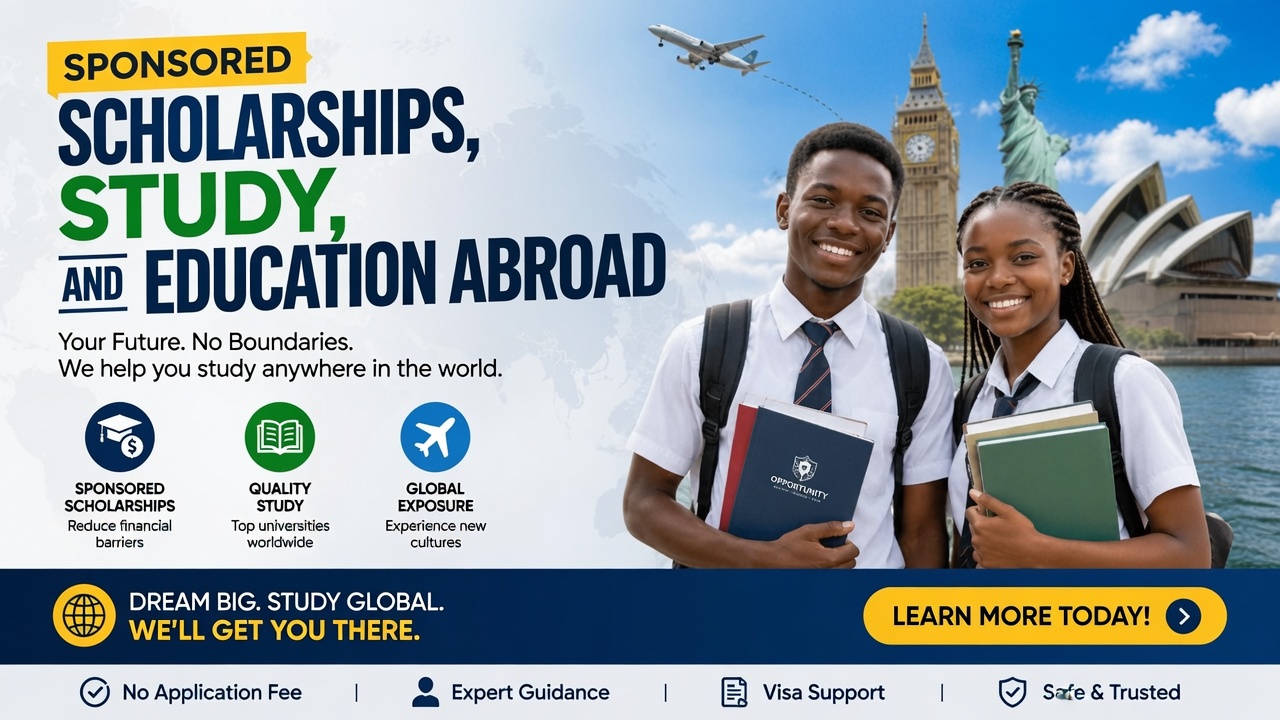
by Sponsored Scholarships, Study, Universities, and Education Abroad in the United States and United Kingdom offer transformative opportunities for ambitious students seeking world-class higher education. These programs provide financial support, academic excellence, and global exposure, making international study accessible. Whether pursuing undergraduate or postgraduate degrees, sponsored scholarships significantly reduce barriers, allowing recipients to focus on academic and personal growth in leading universities.
In the United States, international students can access prestigious sponsored scholarships like the Fulbright Foreign Student Program, which funds graduate studies, research, and professional development across diverse fields. This government-backed initiative covers tuition, airfare, living stipends, health insurance, and more, often totaling $30,000–$60,000+ per year depending on the program and institution. With average undergraduate tuition for international students ranging from $20,000 to $50,000 annually at public and private universities, Fulbright scholarships make elite education feasible.
The United Kingdom excels with programs like Chevening Scholarships, fully funded by the UK government for one-year master’s degrees. These sponsored scholarships cover full tuition (typically £15,000–£30,000), living expenses, travel, and allowances, providing a comprehensive package worth over £25,000–£40,000. UK undergraduate international fees range from £11,400 to £38,000 per year, while postgraduate programs are often more affordable due to shorter durations.
Living costs form a key consideration for sponsored scholarships, study, and education abroad. In the US, expect $10,000–$20,000 annually for accommodation, food, transport, and insurance outside major cities. In the UK, monthly living expenses average £900–£1,400 (higher in London), totaling £10,000–£15,000 yearly. Many scholarships include stipends to cover these, ensuring financial stability during your studies.
Make Sure you read all the vital information, before Applying any Links, follow them step by step to avoid mistakes or error. Thanks
Bookmark job.universities.ng and explore our full library of working abroad resources. Start with our guide to the Opportunity to Get Paid $100,000 to Relocate to the USA via the Construction Visa Program for a comparison of your international options. Dive deeper into US immigration pathways with our USA Work Visa 2026 for Nigerians: H-1B, O-1, L-1, and Green Card Pathways Explained And if you want to build international income while you wait for your visa, explore our guide on Remote Jobs Abroad for Nigerians in 2026: Top Platforms, Best-Paying Roles, and How to Land One
Graduates from US and UK universities enjoy strong return on investment through competitive salaries. In the United States, entry-level salaries for international graduates often start at $55,000–$70,000 annually, with STEM and business fields exceeding $80,000–$100,000+. In the UK, average graduate starting salaries hover around £30,000–£42,000, with higher earnings in finance, engineering, and tech sectors in London. These figures highlight the long-term value of education abroad.
University-specific sponsored scholarships enhance accessibility. In the US, institutions like those participating in the #YouAreWelcomeHere initiative or offering merit awards (e.g., up to full tuition at select colleges) support international talent. UK universities provide Think Big or GREAT Scholarships, offering £5,000–£20,000+ reductions, often combined with government funding for comprehensive support.
To apply for immediate consideration or upcoming cycles, research eligibility thoroughly. For Fulbright, contact your local US Embassy or Fulbright Commission in your home country. Applications typically require academic transcripts, essays, recommendations, and proof of leadership. Deadlines vary but often fall between February and October for the following academic year. Visit the official site: https://foreign.fulbrightonline.org/ for details and country-specific portals.
Chevening Scholarships emphasize leadership and future impact. Applicants submit online via https://www.chevening.org/scholarships/, including essays on career goals, university choices (up to three), and references. Applications usually open in August/September for the next intake, with rigorous selection focusing on potential to contribute back home.
Other notable options include Commonwealth Scholarships in the UK for citizens of developing countries (full funding for master’s/PhD) and various US university merit awards. Always verify current deadlines on official websites, as sponsored scholarships, study, universities, and education abroad opportunities evolve. Prepare strong personal statements highlighting academic merit, extracurriculars, and career vision.
For high school graduates or those seeking undergraduate paths, options like community college transfers in the US or foundation programs in the UK can lead to scholarships. Combine applications with part-time work permissions (up to 20 hours/week in the UK during term time) to gain experience and offset minor costs.
Success in securing these opportunities requires proactive preparation: maintain high GPAs, gain relevant experience, and tailor applications. Many programs offer immediate invitations or priority reviews for exceptional candidates who apply early. Network via EducationUSA (https://educationusa.state.gov/) or British Council centers for guidance.
Formerly, sponsored scholarships for study and education abroad in the US and UK open doors to prestigious universities, reduced financial burdens, and rewarding careers. With costs offset by funding and strong post-graduation salaries, these programs deliver exceptional value. Start your journey today by exploring official application portals and preparing competitive submissions for the upcoming cycles. Your global future awaits through dedicated pursuit of these transformative opportunities.
Scholarship Application Strategies for Sponsored Scholarships, Study, Universities, and Education Abroad
Scholarship Application Strategies for Sponsored Scholarships, Study, Universities, and Education Abroad—especially in the United States and United Kingdom—can dramatically improve your chances of securing fully funded opportunities like Fulbright, Chevening, and university-specific awards.
Make Sure you read all the vital information, before Applying any Links, follow them step by step to avoid mistakes or error. Thanks
Bookmark job.universities.ng and explore our full library of working abroad resources. Start with our guide to the Opportunity to Get Paid $100,000 to Relocate to the USA via the Construction Visa Program for a comparison of your international options. Dive deeper into US immigration pathways with our USA Work Visa 2026 for Nigerians: H-1B, O-1, L-1, and Green Card Pathways Explained And if you want to build international income while you wait for your visa, explore our guide on Remote Jobs Abroad for Nigerians in 2026: Top Platforms, Best-Paying Roles, and How to Land One
- Start Early and Research Thoroughly
Begin 10–12 months before the intended start date. Map out deadlines, eligibility criteria, and required documents. Use official sources:
Fulbright: https://foreign.fulbrightonline.org/
Chevening: https://www.chevening.org/scholarships/
EducationUSA or British Council offices in your country.
Create a spreadsheet tracking scholarships, deadlines, university choices, and essay prompts. Focus on programs aligning with your academic background, leadership experience, and career goals—especially those emphasizing impact in your home country. - Understand Selection Criteria and Tailor Your Profile
Fulbright prioritizes academic merit, leadership potential, and cultural exchange. Chevening seeks future leaders with at least two years of work experience, clear career plans, and networking ability. Highlight measurable achievements: leadership roles, community projects, academic excellence, and professional impact.
Tailor every application. Avoid generic essays—connect your story to the scholarship’s mission (e.g., how you’ll apply UK/US knowledge back home). - Craft Compelling Essays and Personal Statements
Essays are the heart of your application. Use a strong narrative structure:
Introduction — Hook with a personal story.
Body — Detail achievements, challenges overcome, and skills gained.
Conclusion — Link to future goals and the scholarship’s value.
For Chevening, address networking, leadership, and career impact in specific essays. For Fulbright, emphasize your research/study proposal. Write authentically, proofread multiple times, and get feedback from mentors or native speakers. Show, don’t tell—use concrete examples. - Secure Strong Recommendations and Supporting Documents
Choose recommenders who know you well (professors, supervisors) and can speak to your strengths. Provide them with your CV, personal statement, and scholarship details early. Ensure transcripts, CV/resume, proof of English proficiency (TOEFL/IELTS), and any required writing samples or portfolios are accurate and up-to-date. - Apply to Multiple Scholarships and Universities Strategically
Don’t rely on one scholarship. Target 8–12 opportunities, mixing government-funded (Fulbright, Chevening) and university merit awards. For UK programs, apply to 3 universities via Chevening. In the US, discuss placement with the Fulbright Commission. Consider safety schools alongside reach institutions.cfe2af - Prepare for Interviews and Follow-Up
Many programs (Chevening, Fulbright) include interviews. Practice common questions: “Why this scholarship?” “How will you contribute?” Research current events in your field and the host country. Dress professionally, be confident, and demonstrate enthusiasm. - Avoid Common Mistakes
Missing deadlines or submitting incomplete applications.
Using generic/copy-pasted essays.
Poor proofreading (typos kill credibility).
Not following instructions exactly.
Lack of authenticity or exaggeration.
Applying to too few or overly competitive options without backup plans.d1f653 - Leverage Resources and Seek Guidance
Contact EducationUSA (https://educationusa.state.gov/) or British Council centers for workshops and advising. Join alumni networks for insights. Consider professional editing for essays if needed, but keep your voice authentic. - Timeline and Immediate Action Steps
Now — Research and shortlist programs. Gather transcripts and draft essays.
3–6 months before deadline — Secure recommenders, refine documents, take language tests.
Apply early — Many programs offer rolling or priority review.
For the 2026–2027 cycle, check current portals immediately as deadlines often fall between August and October. - Mindset and Persistence
Rejections are common—even strong candidates face them. Use feedback to strengthen future applications. Persistence, combined with strategic preparation, leads to success. Many scholars started with prior rejections but refined their approach.
Additional Resources
Chevening Guidance: https://www.chevening.org/resource-hub/guidance/
Fulbright Country-Specific Info: Search via foreign.fulbrightonline.org
General Scholarship Databases: Scholars4Dev, GoOverseas, or university financial aid pages.
By following these scholarship application strategies, you’ll present a polished, compelling case for Sponsored Scholarships, Study, Universities, and Education Abroad. Start today—your global academic journey in the US or UK is within reach with focused effort and authenticity.
Visa Requirements for Students pursuing Sponsored Scholarships, Study, Universities, and Education Abroad
Visa Requirements for Students pursuing Sponsored Scholarships, Study, Universities, and Education Abroad in the United States and United Kingdom are essential steps after receiving admission and scholarship offers. Meeting these requirements ensures a smooth transition to your academic journey.
United States: F-1 Student Visa
The F-1 visa is the primary nonimmigrant visa for international students pursuing full-time academic studies (undergraduate, graduate, or language programs) at SEVP-certified institutions. Vocational programs may require an M-1 visa.
Make Sure you read all the vital information, before Applying any Links, follow them step by step to avoid mistakes or error. Thanks
Bookmark job.universities.ng and explore our full library of working abroad resources. Start with our guide to the Opportunity to Get Paid $100,000 to Relocate to the USA via the Construction Visa Program for a comparison of your international options. Dive deeper into US immigration pathways with our USA Work Visa 2026 for Nigerians: H-1B, O-1, L-1, and Green Card Pathways Explained And if you want to build international income while you wait for your visa, explore our guide on Remote Jobs Abroad for Nigerians in 2026: Top Platforms, Best-Paying Roles, and How to Land One
Key Requirements:
Acceptance to a SEVP-certified school and receipt of Form I-20.
Payment of the SEVIS I-901 fee (approximately $350).
Completion of the DS-160 online visa application.
Valid passport.
Proof of financial support (tuition, living expenses, and return travel) — often covered or supplemented by sponsored scholarships.
Strong ties to your home country and intent to return after studies (demonstrated through family, property, or career plans).
Recent photo meeting specifications.
English proficiency (usually shown via admission requirements like TOEFL/IELTS).
Application Process:
Receive your I-20 from the university.
Pay SEVIS fee and complete DS-160.
Schedule and attend a visa interview at a U.S. Embassy/Consulate.
Provide supporting documents: I-20, financial proof, transcripts, and scholarship award letters.
Costs: Visa application fee is $185 (non-refundable). Processing times vary by location.70e330
Post-Arrival: Maintain full-time enrollment, report to your Designated School Official (DSO), and comply with work restrictions (limited on-campus or authorized OPT/CPT). Sponsored scholarships often ease financial proof requirements.
Official Resource: https://travel.state.gov/content/travel/en/us-visas/study/student-visa.html
United Kingdom: Student Visa
The Student visa (formerly Tier 4) applies to students aged 16+ studying full-time courses longer than 6 months at licensed sponsors.
Key Requirements:
Confirmation of Acceptance for Studies (CAS) from a licensed student sponsor (your university).
Proof of sufficient funds for tuition (first year/up to 9 months) and living expenses: £1,529 per month in London or £1,171 outside London (up to 9 months). Scholarships can offset these.
English language proficiency (typically CEFR B2 level or higher, often met via IELTS/TOEFL or prior study).
Valid passport or travel document.
Tuberculosis (TB) test if from a listed country.
Parental consent if under 18.
ATAS certificate for certain science/technology courses.
Application Process:
Apply online via the UK Visas and Immigration website.
Pay the visa fee (£558 as of 2026) and Immigration Health Surcharge (IHS, approximately £776 per year).
Submit biometrics and documents (often via application center).
You can apply up to 6 months before your course starts.
Post-Arrival: Work up to 20 hours per week during term time (full-time during vacations). Graduate visa options available after studies. Dependents are restricted for most undergraduate/master’s students.
Official Resource: https://www.gov.uk/student-visa
General Tips for Scholarship Recipients
Use your scholarship award letter as strong evidence of financial support for both US and UK applications.
Apply for your visa immediately after receiving your I-20 (US) or CAS (UK).
Prepare for the visa interview by practicing questions about your study plans, funding, and return intentions.
Check for country-specific requirements or recent policy updates.
Consult EducationUSA (https://educationusa.state.gov/) for the US or British Council offices for the UK for personalized guidance.
Securing the appropriate student visa is a critical milestone in your Sponsored Scholarships, Study, Universities, and Education Abroad journey. Always refer to official government websites for the most current details, as requirements can evolve. Start preparing your documents early to align with scholarship timelines and intake dates. Best of luck with your applications.
Visa Interview Preparation Tips are crucial for students pursuing Sponsored Scholarships, Study, Universities, and Education Abroad in the United States and United Kingdom
Make Sure you read all the vital information, before Applying any Links, follow them step by step to avoid mistakes or error. Thanks
Visa Interview Preparation Tips are crucial for students pursuing Sponsored Scholarships, Study, Universities, and Education Abroad in the United States and United Kingdom. A successful interview demonstrates your genuine intent to study, strong ties to your home country, and ability to meet visa requirements. Preparation builds confidence and clarity.
United States: F-1 Student Visa Interview Tips
The F-1 visa interview at a U.S. Embassy or Consulate is typically short (2–5 minutes) but decisive. Officers assess whether you intend to return home after studies.
Key Preparation Steps:
Organize Documents: Bring your signed Form I-20, DS-160 confirmation, SEVIS fee receipt, passport, scholarship award letter (if applicable), financial proof, transcripts, and acceptance letter. Keep everything in a clear folder.
Dress Professionally: Wear business casual attire. First impressions matter.
Practice English: Interviews are conducted in English. Speak clearly and confidently without memorizing speeches.
Know Your Application Inside Out: Be ready to discuss your school, program, funding, and future plans without hesitation.
Common Questions & Sample Approaches:
Why do you want to study in the US / at this university? — Highlight specific academic strengths, faculty, or resources. Tie it to your career goals.
What is your major and why? — Connect it to your previous studies and future impact back home.
How will you fund your studies? — Reference your sponsored scholarship clearly: “My Fulbright Scholarship covers tuition, living expenses, and travel.”
What are your plans after graduation? — Emphasize returning home to apply your knowledge (e.g., contribute to your field or community).
Do’s and Don’ts: Be concise, honest, and positive. Maintain eye contact. Do not bring family into the interview room (they can wait outside). Avoid volunteering extra information or arguing.bf4fd9
Official Resource: https://travel.state.gov/content/travel/en/us-visas/study/student-visa.html
United Kingdom: Student Visa Credibility Interview Tips
UK interviews (often via video link) focus on credibility—ensuring your course choice is genuine and you meet financial and academic requirements. They can last 10–30 minutes.
Key Preparation Steps:
Review your CAS (Confirmation of Acceptance for Studies), course details, university website, and financial documents thoroughly.
Prepare to explain your funding (scholarships make this stronger).
Practice speaking clearly in English about your study plans.
Common Questions & Sample Approaches:
Why do you want to study in the UK / this course? — Mention academic reputation, specific modules, shorter program duration, or unique opportunities.
Why this university? — Reference rankings, facilities, or alumni success relevant to your goals.
How will you fund your studies? — Detail your sponsored scholarship and any additional support.
What are your plans after completing your studies? — Stress returning home and how the UK qualification will benefit your career there.
Do’s and Don’ts: Use the P.E.E. method (Point, Explain, Example) for structured answers. Be honest about finances and intentions. Stay calm and avoid overly rehearsed responses.
Official Resource: https://www.gov.uk/student-visa
General Visa Interview Preparation Strategies
Research Thoroughly — Know your program, university, costs (even if covered by scholarship), and how it fits your long-term goals.
Demonstrate Ties to Home Country — Talk about family, property, job prospects, or community commitments that will bring you back.
Mock Interviews — Practice with mentors, EducationUSA, or British Council advisers. Record yourself to improve clarity and confidence.
Timeline — Schedule your interview as soon as you receive your I-20 (US) or CAS (UK). Apply early to allow for any delays.
Mindset — Stay calm, positive, and authentic. Officers appreciate genuine, well-prepared students pursuing Sponsored Scholarships, Study, Universities, and Education Abroad.
For scholarship recipients, your award letter is powerful evidence of financial capability and commitment. Leverage resources like EducationUSA (https://educationusa.state.gov/) or local British Council offices for workshops and mock sessions.
Strong preparation significantly boosts your success rate. Review your documents, practice common questions, and approach the interview with confidence. Your journey toward world-class education in the US or UK is achievable with focused effort.
Mock Interview Questions for F-1 Visa
Mock Interview Questions for F-1 Visa are an essential part of preparing for Sponsored Scholarships, Study, Universities, and Education Abroad in the United States. The F-1 visa interview is typically short (2–5 minutes), but officers focus on your genuine intent to study, academic preparedness, financial support, and ties to your home country.
Practice these questions aloud in English. Speak naturally and confidently—avoid sounding memorized.
Academic and Study Plan Questions
Why do you want to study in the United States?
Strong Answer: “The US offers world-class education with advanced research facilities and practical training in [your field], which are not as readily available in my home country. This will help me gain cutting-edge knowledge to contribute to [specific industry or community need] back home.”
Why did you choose this specific university?
Strong Answer: Mention specific reasons like faculty expertise, program curriculum, research opportunities, rankings, or unique resources (e.g., “I chose XYZ University because of its strong [Department/Program] and the opportunity to work with Professor ABC on [relevant topic].”
What will you study / What is your major?
Strong Answer: Be specific: “I will pursue a Bachelor’s/Master’s in [Field] with a focus on [specialization]. This builds directly on my previous studies in [background] and aligns with my career goal of [future role].”
Why can’t you study this program in your home country?
Strong Answer: Highlight quality differences, specific facilities, international exposure, or unique aspects of the US program without criticizing your home country’s education system.
How many universities did you apply to, and how many accepted you?
Strong Answer: Be honest and positive. Explain your choice based on fit rather than just prestige.
Financial and Scholarship Questions
How will you finance your education?
Strong Answer: “My [Fulbright / University / Sponsored Scholarship] fully/partially covers tuition, living expenses, and travel. Additionally, my family supports the remaining costs, as shown in the bank statements and affidavit of support.”
Who is sponsoring you? What is their occupation / income?
Strong Answer: Clearly state parents, scholarship organization, or sponsor. Provide details confidently and reference documents.
Have you received any scholarship?
Strong Answer: Highlight the scholarship details, amount, and how it demonstrates merit and reduces financial burden. This is powerful evidence for sponsored opportunities.
Future Plans and Ties to Home Country
What are your plans after graduation?
Strong Answer: “After completing my studies, I plan to return to [home country] and apply my skills in [specific career or contribution], such as [job sector, family business, or community project]. I have strong family and professional ties here.”
Do you have any relatives in the US?
Strong Answer: Answer honestly. If yes, clarify they won’t support you financially or influence your return plans.
Other Common Questions
What is the cost of your program according to your I-20?
Do you plan to work while studying in the US?
Tell me about your academic background / previous education.
Why are you pursuing this now? (especially if there’s a gap year)